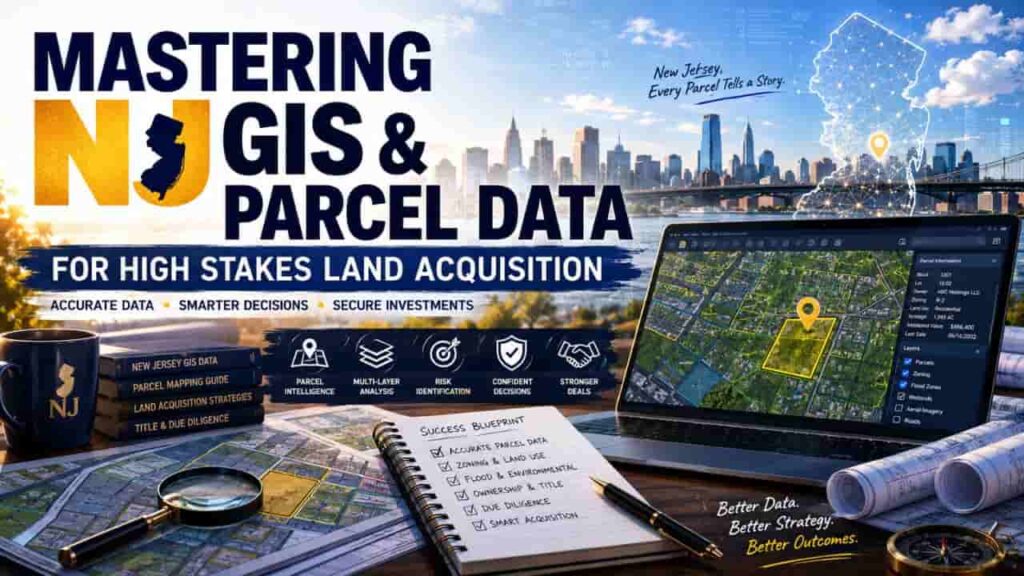
In the hyper competitive New Jersey real estate landscape of 2026, a standard property listing is merely a starting point. For elite land buyers, developers, and investors, the real story is hidden within the state’s complex Geographic Information Systems (GIS). Relying on surface level data is a liability; true leverage comes from deconstructing a parcel’s digital DNA to identify “unbuildable” constraints or hidden development goldmines. This professional roadmap explores New Jersey’s decentralized GIS architecture, providing you with the forensic methodology required to move beyond simple addresses and gain a 360 degree technical command of any lot in the Garden State.
1. The Core Infrastructure, NJ Geographic Information Network (NJGIN)
The NJGIN is the authoritative hub for New Jersey’s spatial data, maintained by the Office of GIS. In 2026, the network provides the framework for nearly 3.5 million digital tax parcels, integrating assessment data with precise graphical boundaries.
Critical Data Portals for 2026
| Portal Name | Primary Function | Strategic Application |
| Property Explorer | Search by Block, Lot, or Address. | Precise parcel identification and MOD-IV tax data retrieval. |
| NJ GeoWeb | Access to NJDEP environmental layers. | Identifying wetlands, flood zones, and contaminated sites. |
| NJ MAP Parcel Explorer | Interactive atlas for ecological and land use data. | Analyzing land use change and conservation blueprint rankings. |
2. Professional Methodology, Executing a Forensic Land Search
Successfully vetting a New Jersey property requires a multi layered search strategy. Follow this professional workflow to ensure no technical detail is overlooked.
Step 1. Initial Parcel Identification
Using the NJ Property Explorer, locate the land using its unique identifiers, County, Municipality, Block, and Lot.
- Tax Maps
Always download the latest PDF tax map linked in the search results to see how the parcel sits relative to neighboring lots and right of ways. - Daniel’s Law Note.
Be aware that as of 2023, certain owner names (law enforcement, judicial officers, etc.) are redacted from public facing GIS portals to ensure privacy.
Step 2. Environmental Constraint Analysis (NJ GeoWeb)
New Jersey is one of the most environmentally regulated states in the U.S. Use NJ GeoWeb to overlay critical risk layers.
- Wetlands (LULC)
Determine if the land is actually buildable or if development is restricted by state environmental laws. - Flood Hazard Areas
Identify if the property is within a 100 year or 500 year floodplain, which directly impacts insurance costs and foundation requirements. - Zoning Layers
While some GIS portals provide zoning, always cross reference with the specific municipal zoning ordinance for set back and density requirements.
Step 3. Historical Imagery and Change Analysis
Use the NJ Time Machine to compare aerial imagery from 1930 against 2020 and 2026 captures.
- Legacy Issues. Historical imagery can reveal old structures that were demolished (potentially leaving buried debris or tanks) or historical stream beds that are now filled in but still present drainage risks.
3. Official Data Sources and County Stewardship
While the state maintains a composite dataset, the most current stewardship of land records often occurs at the county level.
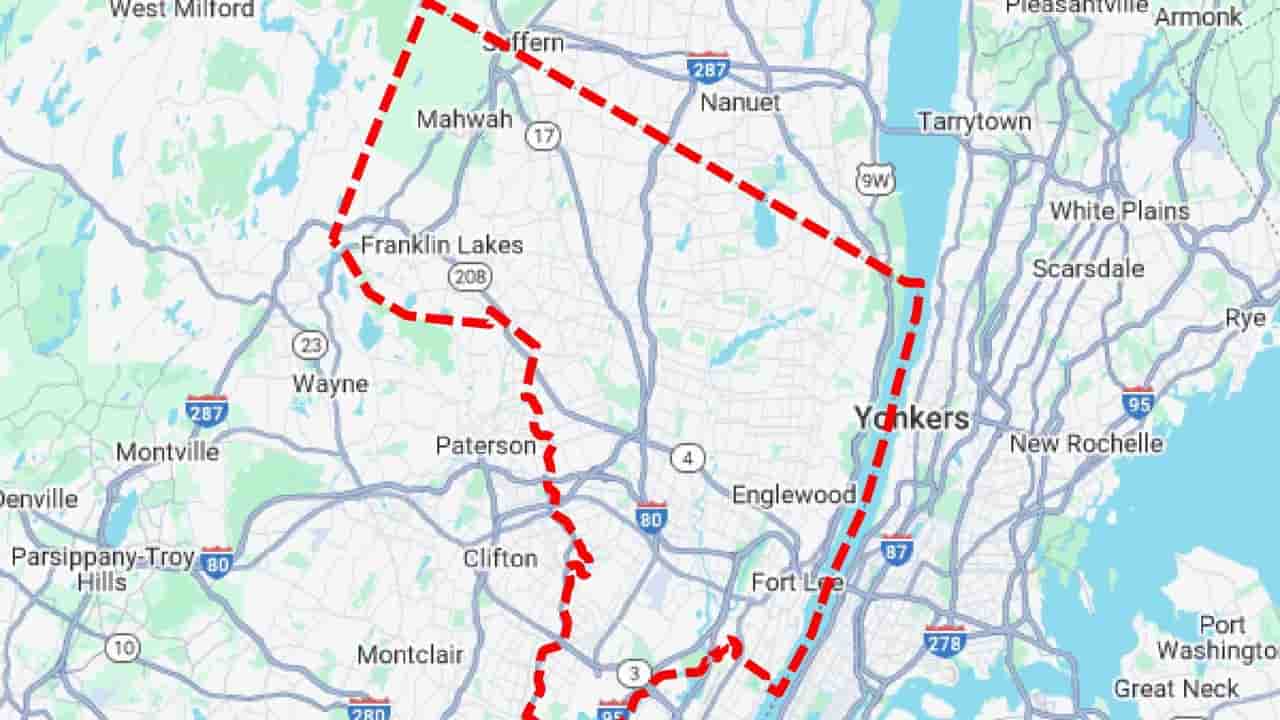
- County Specific GIS Portals. Counties such as Atlantic, Bergen, and Monmouth maintain their own advanced GIS viewers with localized data layers like road level elevation projects or specific municipal drainage info.
- Data Accuracy Disclaimer. Official GIS parcel boundaries are for graphical analysis only. They are not based on survey data and should never be used as a legal description or a substitute for a professional land survey by a licensed NJ surveyor.
4. Strategic Checklist for Professional Land Buyers
- Verify MOD-IV Data.
Ensure the property class (e.g., Residential, Farmland, Vacant) matches the physical reality of the lot. - Download Shapefiles.
For professional planning, download official Shapefiles or File Geodatabases from NJGIN to use in specialized mapping software. - Review Conservation Status.
Check if the parcel is part of the NJ Conservation Blueprint, which may indicate the land is prioritized for preservation or has restricted development rights. - Monitor Land Use Change.
Use the Municipal Land Use Change Viewer to see how urbanization or farmland loss is affecting the immediate area.
Conclusion
In 2026, land buying in New Jersey is a digital first endeavor. By mastering tools like NJ-GeoWeb, Property Explorer, and NJ MAP, you gain an authoritative edge in your due diligence. However, always remember that digital data is a starting point, not the end. Use GIS to identify “red flags” early, but always finalize your purchase with a professional survey and a comprehensive title search to protect your investment
FAQs
How accurate are NJ GIS parcel boundaries for property line identification?
It is important to understand that New Jersey GIS parcel boundaries are for graphical and planning purposes only. While they provide an excellent overview of a property’s shape and location, they are not a substitute for a professional land survey. In 2026, GIS data remains a “best fit” representation and should never be used as a legal description for boundary disputes.
Why is the property owner’s information redacted on NJ GIS portals?
Since 2023, New Jersey has enforced Daniel’s Law, which requires the redaction of home addresses and names of “covered persons” including active and retired judges, prosecutors, and law enforcement officers from public facing government databases. If a parcel shows as “Redacted” or “Protected,” it is likely owned by an individual covered under this privacy legislation.
How can I identify wetlands or environmental constraints on a parcel?
Professional land buyers should utilize the NJ-GeoWeb portal to overlay Land Use/Land Cover (LULC) layers. This tool allows you to identify state regulated wetlands, riparian zones, and flood hazard areas that can severely limit or prohibit development. Identifying these “deal killer” constraints early in the due diligence process is vital to avoiding costly mistakes.
Where can I find the official Block and Lot numbers for a property?
The most authoritative source for this data is the NJ Property Explorer, which integrates high resolution MOD-IV tax assessment records. You can search by street address to find the unique County, Municipality, Block, and Lot identifiers required for all legal and municipal filings in New Jersey.
How often is the New Jersey statewide parcel map updated?
While the NJGIN (New Jersey Geographic Information Network) aims for frequent integration, the stewardship of data often happens at the county level. In early 2026, major updates were published for high growth areas including Bergen, Monmouth, and Atlantic Counties. Always check the “Last Updated” metadata on the specific GIS portal to ensure you are viewing the most current records available.