The New Jersey housing landscape is undergoing its most significant transformation in decades. As we move through 2026, the traditional “single family” residential model is evolving to meet the demands of a growing population and a shortage of affordable housing. At the heart of this shift is the rise of Accessory Dwelling Units (ADUs) secondary housing units located on the same lot as a primary residence.
For New Jersey homeowners, ADUs (often called “Granny Flats” or “In law Suites”) represent a dual opportunity, a solution for multi generational living and a powerful engine for rental income. However, working through the Municipal Land Use Law (MLUL) and the specific 2026 state mandates requires a professional understanding of local “Home Rule” zoning. This guide provides an expert audit of the new regulations and a step by step roadmap for implementation.
The 2026 Regulatory Pivot, Why ADUs are Trending
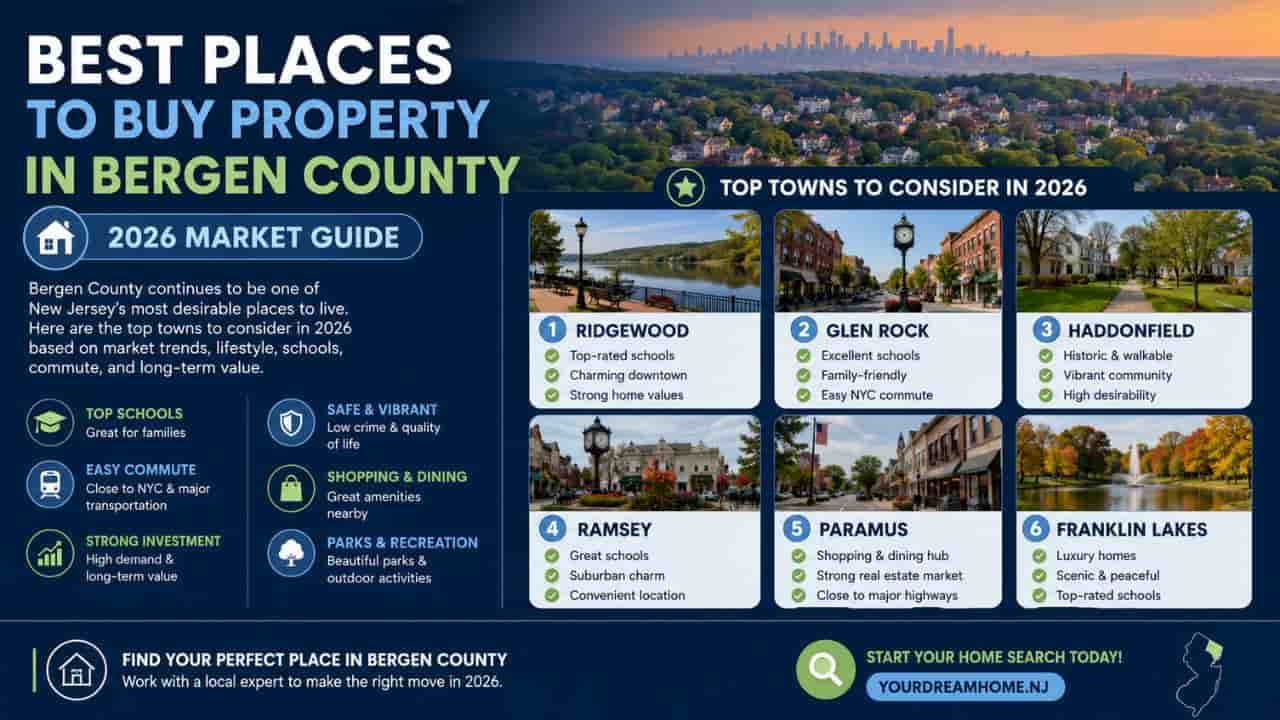
Historically, New Jersey municipalities used restrictive zoning to limit secondary structures. However, new state level initiatives in 2026 have incentivized towns to adopt “ADU friendly” ordinances to combat the housing crisis. Towns that have embraced these changes, ranging from Princeton and Montclair to suburban hubs in Bergen County are seeing a surge in property valuations.
The Economic Impact for Homeowners
- Property Appreciation.
- Adding a legal ADU can increase your property’s resale value by 20% to 35%, depending on the municipality.
- Passive Income.
- With New Jersey rental rates at historic highs, ADUs provide a consistent cash flow that can offset rising property taxes.
- Housing Stability.
- ADUs allow seniors to “age in place” while younger family members occupy the primary residence, or vice versa.
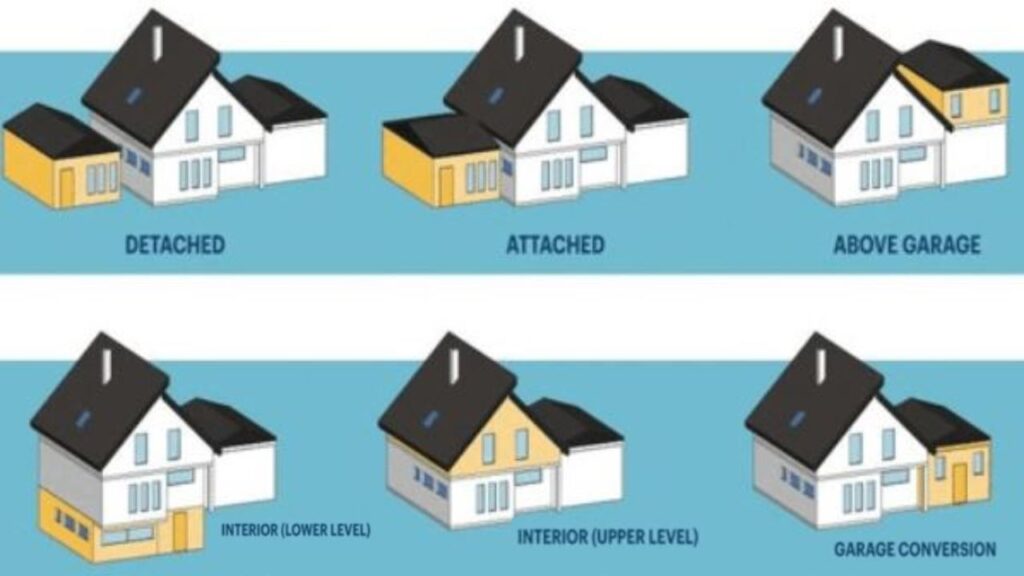
Types of Accessory Dwelling Units in NJ
Before breaking ground, it is vital to categorize your project. The Uniform Construction Code (UCC) applies different standards based on the “type” of unit being created.
| ADU Type | Description | Primary Zoning Concern |
| Detached (DADU) | A standalone structure, such as a converted garage or new cottage. | Setbacks and Rear Yard Coverage. |
| Attached | An addition to the main house with a separate entrance. | Floor Area Ratio (FAR) and Bulk Requirements. |
| Interior Conversion | Converting a basement or attic into a self contained apartment. | Egress (Safety exits) and Ceiling Heights. |
ADU Zoning Requirements 2026
While the state has issued “Best Practice” guidelines, New Jersey remains a Home Rule state. This means your local zoning officer is the ultimate authority. In 2026, most “ADU friendly” towns have standardized several key requirements.
1. Occupancy and Owner, Occupancy Rules
Many NJ towns require the property owner to live on site (either in the primary house or the ADU). This prevents “absentee landlord” scenarios in quiet residential neighborhoods.
2. The “Independent Living” Standard
To be classified as a legal ADU and not just a “guest room,” the unit must have its own.
- Permanent kitchen facilities (stove, sink, refrigerator).
- Dedicated bathroom.
- Separate entrance/exit.
3. Parking Mandates
In 2026, many towns have relaxed parking rules for ADUs, especially if the property is within a half mile of an NJ Transit hub. However, suburban zones may still require one off street parking space for the ADU tenant.
Step by Step Implementation Guide for Homeowners
If you are considering an ADU in 2026, follow this professional sequence to ensure legal compliance and protect your equity.
Step 1. The Feasibility Audit
Check your town’s Official Zoning Map. Does your zone allow “Accessory Apartments”? If not, you may need a Use Variance (D-Variance), which involves a public hearing before the Zoning Board.
Step 2. Environmental and Utility Check
- Sewer/Septic.
If you are on a septic system, you must prove to the County Board of Health that your system can handle the increased “gallonage” of an extra bedroom. - NJDEP Overlays.
Use NJDEP GeoWeb to ensure your proposed detached ADU isn’t encroaching on wetlands or a riparian buffer.
Step 3. Architectural Design and UCC Filing
Hire a licensed NJ architect to draft plans that meet the International Residential Code (IRC), as adopted by New Jersey. This includes specific requirements for fire rated walls between the ADU and the main house.
Step 4. Permit Procurement
You will need two primary approvals.
- Zoning Permit. Confirms the ADU is a permitted “use” and meets setbacks.
- Construction Permit. Includes sub codes for Electric, Plumbing, and Building safety.
Financial Considerations, Taxes and Financing
Adding an ADU will trigger a Property Tax Reassessment. While your home value increases, your annual tax bill will likely reflect the new “improvement.”
- Financing in 2026.
Many NJ lenders now offer “Renovation Loans” (such as Fannie Mae HomeStyle) that allow you to borrow against the future value of the home including the ADU. - Grants.
Check with the NJ Department of Community Affairs (DCA); certain programs offer subsidies for ADUs if the homeowner agrees to rent the unit at an “affordable” rate for a set period.
Conclusion
As we look toward the remainder of 2026, Accessory Dwelling Units are no longer a niche housing trend; they are a cornerstone of New Jersey’s residential future. For the homeowner, an ADU is a strategic asset that provides flexibility, security, and wealth generation. By meticulously working through the local zoning laws and the Uniform Construction Code, you can transform your backyard into a high value residential solution that benefits both your family and the community at large.
FAQs
Is an ADU legal in all New Jersey towns?
No. While many towns (like East Orange or Maplewood) have passed ADU ordinances, others still prohibit them. You must check your specific municipal zoning code.
Can I rent out my ADU on Airbnb?
This depends on your town’s Short Term Rental (STR) ordinance. Some NJ towns allow ADUs for long term residents but ban them for stays shorter than 30 days.
What is the maximum size for an ADU in NJ?
Most ordinances limit ADUs to a percentage of the main house’s size (e.g., 40%) or a maximum square footage (typically 800–1,000 sq. ft.).
Do I need a separate water meter for my ADU?
Most towns allow you to share the main house’s water and sewer lines, but you may choose to install separate electric meters to simplify utility billing for tenants.
How much does it cost to build a detached ADU in NJ?
In 2026, costs typically range from $150,000 to $300,000, depending on utility connections and finishes.
Does a basement apartment count as an ADU?
Yes, if it has a private entrance, kitchen, and bathroom. It is often referred to as an “Internal” or “Attached” ADU.
Will adding an ADU increase my property taxes?
Yes. Your local tax assessor will view the ADU as a “significant improvement,” which will lead to a higher assessed value.
What are the egress requirements for an ADU?
Under the NJ UCC, every bedroom in an ADU must have at least one “emergency escape and rescue opening” (usually a window of a specific size) that leads directly outside.
Can I build an ADU if I have a septic tank?
Only if the Board of Health certifies that the septic tank is sized correctly for the total number of bedrooms on the property. You may need to upgrade your system.
What is a “Granny Flat” vs. an ADU?
They are the same thing. “ADU” is the professional/legal term used in zoning, while “Granny Flat” is the common colloquial term.