Understanding the average property tax by town is the most critical factor for anyone navigating the New Jersey real estate market in 2026. As the state with the highest tax burden in the U.S., New Jersey’s average annual property tax bill has now climbed into the $9,141 to $10,000+ range. However, the “Garden State” offers a massive spectrum of costs while elite enclaves in Essex, Bergen, and Union counties frequently see tax bills soaring above $20,000, strategic buyers can still find “low-tax” havens where bills remain under $5,000.
For the 2026 fiscal year, localized data from the Department of Community Affairs reveals that even NJ’s most affordable towns, such as Camden (~$2,167) and Dennis (~$4,091), still sit significantly above the national average of $2,471. Whether you are a first-time homebuyer or a resident looking to relocate, our expert analysis of 2026 town-level tax data provides the transparency needed to budget effectively in the nation’s most complex tax environment.
New Jersey Property Tax Benchmarks: 2026 Town-Level Data
The following table highlights the extreme variance in property tax liabilities across different New Jersey municipalities.
| Tax Category | Representative Towns | Est. Annual Tax Bill |
| High-Tax Hubs | Essex, Bergen, & Union Towns | $15,000 – $20,000+ |
| Statewide Average | NJ Municipality Average (2026) | $9,141 – $10,000+ |
| Affordable Tier | Washington (Burlington), Dennis | Under $5,000 |
| Lowest Tax Entry | Camden, Lower Alloways Creek | $2,167 – $2,714 |
Understanding the 2025-2026 Tax Surge
The rise to a statewide average of $10,570 marks the second consecutive year that the average bill has exceeded the $10,000 threshold. This trend is closely tied to rising property values, which saw a statewide average increase of 5.79% over the last year, bringing the average property value in New Jersey to $405,153.
While the state average provides a benchmark, the actual impact on homeowners varies drastically based on municipal boundaries. The “tiniest” and “wealthiest” towns often see astronomical figures, while rural outliers maintain significantly lower costs.
Extremes in NJ Property Taxes: From Tavistock to Walpack
New Jersey’s tax landscape is defined by its extremes. On one end of the spectrum, specialized municipalities with unique residency requirements lead the state in costs.
- The Highest Bills (Tavistock):
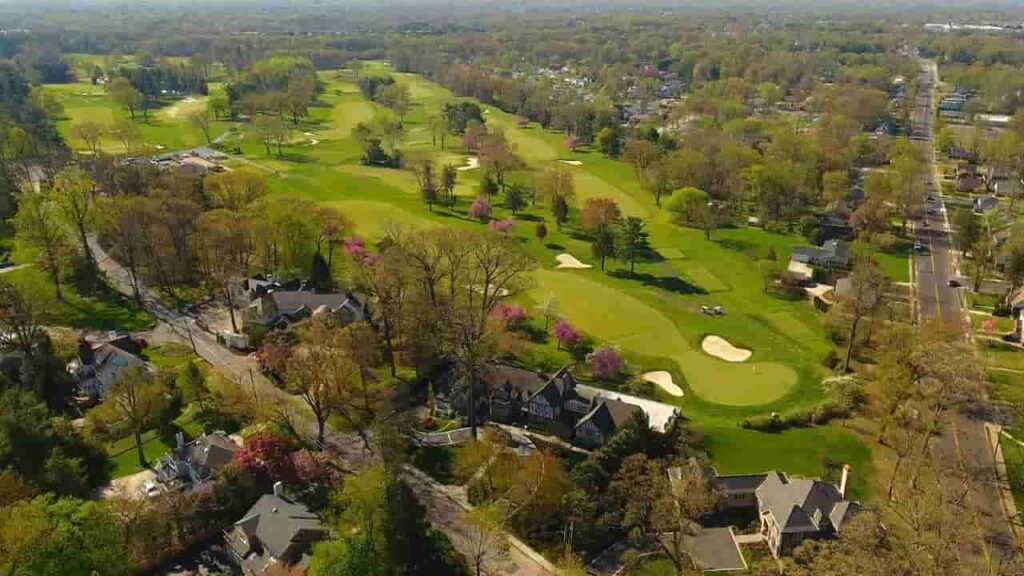
Residents in this tiny Camden County municipality paid an average of $38,387. As a unique outlier, Tavistock consists of only three homes built around a luxury golf course, where residency is tied to course membership. - The Wealthiest Enclaves (Millburn):
Following Tavistock, Millburn in Essex County reported the second-highest average at $26,292. - The Lowest Bills (Walpack):
Conversely, Walpack in Sussex County maintains the state’s lowest average at $1,143. However, this reflects its status as the second least-populated town, having fewer than 10 residents and no local school district or full-time staff.
Atlantic County Municipality Breakdown (2025-2026)
For many homeowners in the Atlantic County region, tax bills remain below the statewide average, though several towns saw notable percentage increases.
| Municipality | Avg. Property Tax (2025) | Avg. Property Value | Tax Change (2024-25) |
| Longport | $13,595 | $1,224,169 | +0.71% |
| Linwood | $11,872 | $302,206 | +3.65% |
| Margate | $10,545 | $590,107 | +6.33% |
| Northfield | $8,299 | $219,731 | +5.41% |
| Brigantine | $7,655 | $392,125 | +4.91% |
| Mullica | $7,373 | $185,915 | +10.59% |
| Egg Harbor | $7,259 | $213,463 | +1.74% |
| Absecon | $6,048 | $171,987 | +5.53% |
| Hamilton | $5,947 | $168,951 | +4.40% |
| Atlantic City | $4,224 | $124,991 | -0.91% |
Where Does the Money Go? The Role of School Funding
A critical component of New Jersey’s high tax rate is the heavy reliance on property taxes to fund the public education system. On average, funding for schools accounts for 52% of a homeowner’s total tax bill.
In many high-cost areas, this percentage is even more significant. There are 178 towns across New Jersey where more than 60% of every tax dollar collected is diverted specifically to local schools. The remainder of the funds cover:
- Municipal government operations
- Local infrastructure and road maintenance
- Public libraries and emergency services
- County-level government services
Strategic Tax Relief: Staying Ahead of the Record Highs
With taxes hitting record levels, the state has promoted several property tax relief programs to ease the burden on specific demographics. Understanding these benefits is essential for budgeting in 2026.
- Stay NJ:
A specialized program designed to provide significant relief to senior homeowners. - ANCHOR Program:
The Affordable New Jersey Communities for Homeowners and Renters (ANCHOR) provides rebates to a broad range of residents based on income levels. - Senior Freeze:
This benefit allows eligible seniors and disabled residents to “freeze” their property tax at a certain level, with the state reimbursing the difference if taxes increase.
Key Takeaways for Homeowners in 2026
Data from the Department of Community Affairs highlights that while the statewide average of $10,570 is a record high, the “tax hit” to a resident’s wallet is localized.
- Value vs. Tax Correlation:
Average property values grew by 5.79%, outpacing the 4.7% growth in taxes, suggesting that while bills are higher, they are scaling alongside property equity. - Municipal Outliers:
Towns like Atlantic City actually saw a slight decrease (-0.91%) in their average bill, proving that state aid and local politics can influence the final number. - Future Outlook:
As property values continue to fluctuate, monitoring DCA updates and applying for state relief programs like ANCHOR remain the best defense for New Jersey taxpayers.
Conclusion
With New Jersey’s average property tax bill officially hitting a record $10,570, staying informed is no longer optional it’s a financial necessity. While towns like Tavistock and Millburn represent the high-end extremes, the broader trend shows a 4.7% statewide increase driven largely by essential school funding. To protect your home investment, proactively utilize state relief programs like Stay NJ, ANCHOR, and Senior Freeze. Navigating these record highs requires a data-driven approach to ensure you aren’t overpaying in the nation’s most complex tax environment.
FAQs
What is the average property tax bill in New Jersey for 2026?
The latest state data reveals that the average NJ property tax bill has reached a new record high of $10,570, an increase of $475 from the previous year.
Which New Jersey town has the highest property taxes?
Tavistock in Camden County currently holds the highest average tax bill at $38,387, followed by Millburn in Essex County at $26,292.
Where can I find the lowest property taxes in NJ?
Walpack in Sussex County has the state’s lowest average bill at $1,143, though it is a unique case with fewer than 10 residents and no local school district.
Why are New Jersey property taxes so high?
A major factor is local school funding, which accounts for an average of 52% of a homeowner’s total tax bill. In 178 towns, school costs make up over 60% of the bill.
How much did NJ property values increase recently?
Statewide property values saw a significant rise of 5.79% over the last year, bringing the average property value to $405,153.
Are there any NJ towns where property taxes decreased?
Yes, while most areas saw increases, some municipalities like Atlantic City saw a slight decrease of -0.91% in their average property tax bill.
How can I lower my New Jersey property tax bill?
Residents can reduce their burden by applying for state-funded relief programs such as Stay NJ, ANCHOR, and the Senior Freeze benefit.
Where can I look up the specific property tax for my town?
Homeowners should refer to the official New Jersey Department of Community Affairs (DCA) town-by-town data for the most accurate and updated tax records.