In the high stakes environment of New Jersey real estate, property tax management is no longer a passive annual task. It is a critical financial strategy. With the state’s average property tax levy officially crossing the $10,570 threshold in 2026, homeowners and investors are facing unprecedented fiscal pressure. Central to this burden is the “Assessed Value,” a technical determination that often deviates from actual market reality, leading to inflated tax liabilities. This professional guide serves as your strategic roadmap to understanding the New Jersey tax assessment cycle. We provide an expert level breakdown of the valuation methodologies used by municipal assessors, a forensic analysis of the “Green Card” notification system, and the precise legal protocols required to execute a successful tax appeal.
1. The Anatomy of an NJ Property Tax Bill
Your tax bill is not a random number. It is the product of two primary variables. the Assessed Value of your home and the Municipal Tax Rate.
The Core Formula
To understand your bill, you must understand this calculation.
{Annual Property Tax} =Assessed Value x Total Tax Rate %100
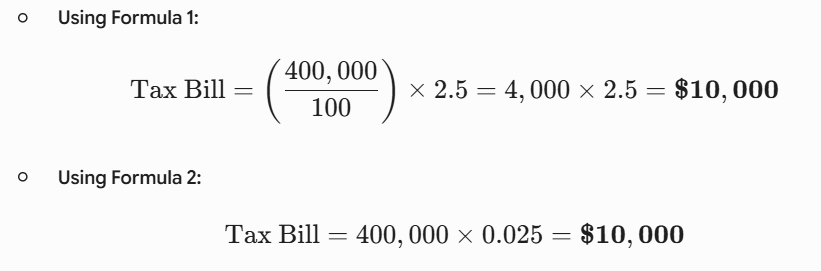
A. Formula 1 (Standard NJ Format)

B. Direct Percentage Format

Practical Example
If a home has an Assessed Value of $400,000 and the local General Tax Rate is 2.5% ($2.50 per $100 of value):
Important Note. The Assessed Value is determined by your local municipal tax assessor and may differ from the actual market value of the home. The total General Tax Rate combines municipal, county, and local school district budget requirements.
Where Does the Money Go?
Once paid, your taxes are disbursed to three main taxing districts.
- School Districts (approx. 53%). Funding local K-12 education.
- Municipal Government (approx. 29%). Covering local police, fire, and infrastructure.
- County Government (approx. 18%). Funding county wide services and courts.
2. Reading Your Assessment Notice (The Green Card)
Every February, New Jersey homeowners receive a Notice of Assessment (often referred to as the “Green Card”). This is not a bill, but it determines what your bill will be for the rest of the year.
Key Sections to Audit
| Section | Description | Professional Tip |
| Assessed Value | The value of land plus “improvements” (buildings). | Ensure this doesn’t exceed 100% of market value. |
| Net Taxable Value | The value after any exemptions are applied. | Verify your Senior or Veteran exemptions are listed. |
| Property Class | Categorization (e.g., Residential 2). | Errors here can lead to incorrect tax rates. |
3. The 2026 Tax Appeal Process, A Professional Roadmap
If you believe your assessment is higher than the actual market value of your home, you have the legal right to file an appeal. Note, You cannot appeal the “taxes” themselves, only the “assessment”.
Step 1. Verification of Market Value
Properties are valued as of October 1st of the prior year. Research “Comparable Sales” (Comps) that sold between April and October of last year to prove your home’s true value.
Step 2. Observe the Deadlines
New Jersey is strict with timelines. Missing a deadline usually waives your right to appeal for the entire year.
- Standard Deadline. April 1, 2026.
- Revaluation Districts. May 1, 2026 (For towns that recently underwent a city wide reassessment).
Step 3. Filing the Petition
File a Petition of Appeal with your County Board of Taxation. For assessments exceeding $1,000,000, you may file directly with the Tax Court of New Jersey.
4. 2026 Property Tax Relief Programs
The State of New Jersey has launched historic relief initiatives in 2026 to combat rising costs.
ANCHOR Program
The ANCHOR (Affordable New Jersey Communities for Homeowners and Renters) program provides direct rebates.
- Homeowners. Can receive up to $1,500 depending on income.
- Renters. Can receive up to $450.
Stay NJ (New for 2026)
This landmark program targets seniors (65+).
- Benefit. Up to 50% off property tax bills, capped at $6,500.
- Launch. Benefit payments are scheduled to begin in January 2026.
Senior Freeze (PTR)
This program “freezes” your taxes at a base year, and the state reimburses any subsequent increases. Income limits have been expanded recently to include more middle class residents.
Final Expert Advice
Property tax management is a year round responsibility. Review your “Green Card” in February, monitor the April 1st appeal deadline, and ensure your PAS-1 application is submitted by October to maximize your rebates.
Tip. Before filing an appeal, use our [NJ Property Tax Calculator] to estimate your potential savings and see if the cost of filing is worth the return.
FAQs
If my property assessment increased, will my taxes automatically go up?
Not necessarily. A property assessment determines your proportionate share of the total municipal tax levy, not a fixed dollar amount.
The Balancing Act. Tax rates are typically inversely related to total assessed values.
The Baseline Rule. If your home’s value increased by 10%, but the town wide average increase was also 10%, your tax bill may stay roughly the same.
When to Worry. You are most likely to see a tax increase if your assessment rises significantly more than the municipal average.
What is the deadline to appeal my 2026 property assessment?
Deadlines are strict and vary by county and assessment type.
Standard Deadline. For most counties, the deadline to file a petition of appeal with the County Board of Taxation is April 1, 2026.
ADP Counties. Municipalities in “Assessment Demonstration Program” counties (like Monmouth) often have an earlier deadline of January 15, 2026.
High Value Properties. If your assessment exceeds $1 million, you may file an appeal directly with the New Jersey Tax Court by April 1, 2026.
Can I appeal my actual tax bill or just the assessment?
By law, you cannot appeal your tax bill or the local tax rate. You may only challenge the assessed value of your property.
The Objective. To win an appeal, you must prove your property’s assessed value does not reflect its True Market Value as of October 1, 2025.
Necessary Evidence. Success requires recent, “arms length” sales of comparable properties. Neighboring assessments or personal financial hardship are generally not accepted as evidence.
How do the 2026 ANCHOR and Stay NJ programs affect my taxes?
These programs provide direct relief that offsets your tax burden but does not change your property’s assessment.
Stay NJ 2026. This new senior focused program offers a credit of up to 50% of property taxes paid, though benefits are currently capped at $6,500 for all combined relief programs.
Combined Benefits. New legislation for 2026 introduced a streamlined application allowing residents to apply for Stay NJ, ANCHOR, and the Senior Freeze program all at once.
What is “Chapter 123” and why does it matter for my appeal?
“Chapter 123” is a legal formula used to ensure fairness in non revaluation years.
The Ratio. It establishes a “common level range” (usually 15% above or below a municipality’s average assessment ratio).
The Impact. Even if your assessment is lower than market value, you may still be over assessed if your property’s “implied market value” exceeds its actual fair market value when adjusted by this ratio.