New Jersey property taxes are notoriously high, but missing payments triggers a precise, legally mandated administrative process. Whether you are a homeowner falling behind due to financial hardship or an investor looking for high yield municipal tax lien certificates, understanding the local laws is crucial. Under New Jersey Revised Statutes (N.J.S.A. 54:5-1), property taxes are a continuous lien on the real estate. If these balances remain unpaid, the municipality has the legal right to sell that lien to recover its budget. This guide breaks down the legal timeline, financial consequences, and exit strategies for both homeowners and tax buyers in the Garden State.
The New Jersey Property Tax Delinquency Timeline
The state enforces a rigid operational sequence when property taxes go unpaid. Property taxes are due quarterly on February 1st, May 1st, August 1st, and November 1st. Most municipalities offer a standard 10 day grace period. If payment is not received by the 11th, delinquency officially begins.
Quarterly Due Date & Grace Period (Day 1 to 10)
Taxes are due on the 1st of the quarter. A 10 day grace period is standard. Payments received after the 10th accumulate interest retroactively to the 1st.
Official Delinquency Notice (Month 1 to 2)
The municipal tax collector sends an official notice of delinquency outlining the unpaid principal balance and accumulated statutory interest penalties.
Tax Sale Advertisement (4 Weeks Pre Sale)
The town publishes a legal notice of the upcoming public tax sale in a local newspaper for four consecutive weeks and posts notices in five public places.
The Public Tax Sale Auction (Variable (Varies by Town))
The municipality holds a public auction (frequently online via platforms like Real Auction) where the Tax Sale Certificate is sold to the lowest bidding investor.
Interest Rates and Financial Penalties Explained
When a homeowner misses a payment, the financial penalties scale quickly. New Jersey law allows municipalities to charge high interest rates to encourage prompt settlement of municipal liens.
- The Baseline Delinquency Tier. Municipalities charge up to 8% interest per year on the first $1,500 of the delinquency.
- The Elevated Delinquency Tier. For any delinquent amount over $1,500, the interest rate jumps up to 18% per year.
- The Year End Penalty (YEP). If the total delinquency (principal plus interest) exceeds $10,000 at the end of the fiscal year, the town can slap on an additional 6% flat penalty.
This compounding interest structure means a tax bill can spiral out of control within 12 to 24 months, making early intervention critical for the property owner.
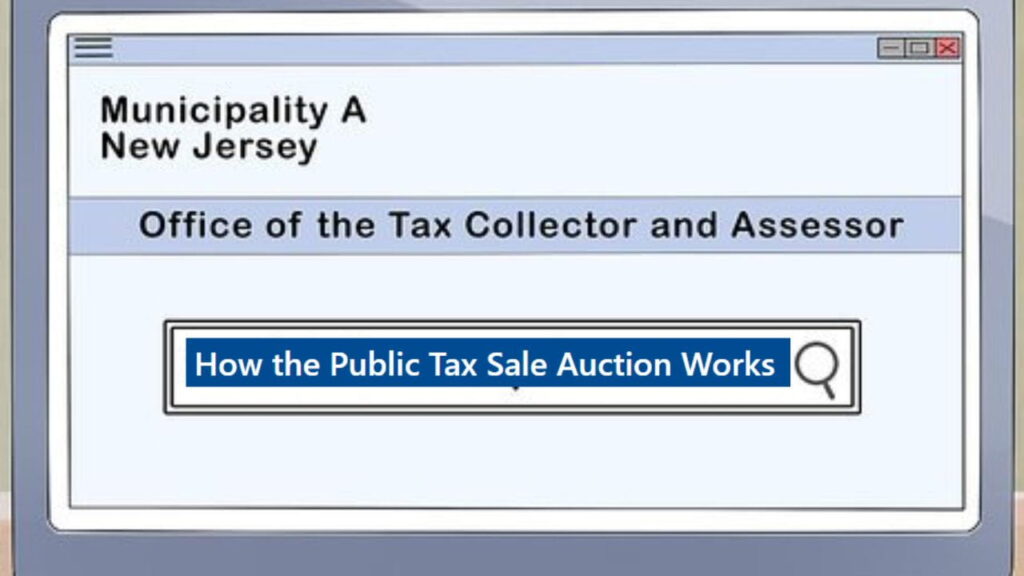
How the Public Tax Sale Auction Works
The phrase “tax sale” is often misunderstood by the public. The municipality is not selling the actual physical house at this stage. Instead, they are auctioning a Tax Sale Certificate, which represents a financial lien against the title of the property.
[Unpaid Taxes] ➔ Public Auction ➔ Investor Buys Certificate ➔ Lien Attached to Title
At the public auction, the bidding starts at an 18% interest rate and is bid downward. Investors compete by offering to accept a lower interest rate on their money. If the bidding reaches 0%, buyers switch to bidding a premium (cash paid above the tax debt face value) to win the lien. If no private investors bid on a property’s lien, the municipality automatically purchases the certificate at an 18% interest rate. This is known as a “Strike Off.”
Strategic Manual for Homeowners and Tax Investors
To manage this high stakes ecosystem, both sides of the transaction must follow clear, legally compliant procedures.
The Homeowner’s Guide to the Right of Redemption
If an investor buys a tax lien certificate on your property, you do not lose your home immediately. You enter a strict legal buffer zone known as the Right of Redemption. You have a minimum of two years from the date of the tax sale to pay off the debt before the investor can attempt to take ownership of the property.
1. Request a Payoff Calculation. Contact Tax Collector
Do not try to pay the investor directly. Request an official redemption calculation from your municipal tax collector. They will provide the exact total required to clear the title.
2.Secure Certified Funds. No Personal Checks.
Gather the total amount in certified funds (cashier’s check, certified bank check, or cash). Personal checks are rejected because the town must guarantee the funds are real.
3.Submit Redemption Payment .Processing the Clear
Deliver the certified payment directly to the municipal tax office. The tax collector processes the payment, cuts a check to reimburse the investor, and satisfies the lien.
4.Verify Lien Cancellation. County Clerk Record
Ensure the tax collector cancels the Tax Sale Certificate with the County Clerk. This clears the cloud on your title, restoring your property to unencumbered status.
The Investor’s Guide to Returns and Foreclosure
For real estate investors, purchasing tax sale certificates provides a steady stream of passive municipal revenue, backed by real property assets.
- Earning Interest. The investor earns the final winning interest rate from the auction on the face value of the certificate, plus any subsequent delinquent taxes they pay to protect their position.
- The Two Year Rule. The investor must hold the certificate for two full years. During this time, they have no right to enter the property, collect rent, or evict residents.
- In Rem Foreclosure. If the homeowner fails to redeem the lien within two years, the investor can hire a real estate attorney to file an In Rem foreclosure action in New Jersey Superior Court. If successful, the court awards the investor full, clear title to the property, completely stripping the owner of their equity.
Comparative Matrix, Homeowner Risks vs Investor Rules
To summarize the operational balance of power under New Jersey tax law, look at how the statutory mechanics apply differently to each party.
| Operational Factor | Homeowner Rules & Protections | Investor Requirements & Rights |
| Max Financial Penalty | Subject to up to 18% interest and an optional 6% year end penalty if over $10,000. | Cannot artificially inflate fees, must register all subsequent tax payments through the collector. |
| Property Access Rights | Retains full possession, occupancy, and operational usage rights during redemption. | Absolutely zero right to enter, modify, or trespass on the property prior to final foreclosure judgment. |
| Critical Deadlines | Must redeem the complete lien balance within 2 years to prevent the initiation of foreclosure. | Must initiate foreclosure within 20 years of certificate issuance, or the tax lien becomes completely void. |
Official Notice for Homeowners. If you receive a notice that your property is headed to a municipal tax sale, contact your local tax collector immediately to request a payment plan. Under specific conditions, towns are authorized to grant an Omnibus Property Tax Installment Program to help residents clear back taxes over a multi year period without losing their primary residence.
Conclusion
Managing New Jersey property tax delinquencies demands strict adherence to legal timelines. For homeowners, understanding your Right of Redemption and acting before the two year foreclosure window closes is vital to preserving equity. For real estate investors, analyzing municipal tax sale certificates under statutory limits ensures strong, asset backed returns. Whether you are seeking immediate property tax relief or looking to invest in local tax lien sales, staying informed about NJ municipal tax laws keeps you protected.
FAQs
What happens if I miss my quarterly New Jersey property tax payment?
Your account becomes delinquent, and the municipal tax collector applies statutory interest penalties ranging from 8% to 18% retroactively to the original due date.
Can a town sell my actual house at an NJ tax sale auction?
No. The municipality only auctions a Tax Sale Certificate, which places a financial lien against your property’s title. You retain ownership and possession.
How long do homeowners have to save their home after a tax lien sale?
New Jersey grants a strict two year redemption period from the tax sale date to pay off the full debt before foreclosure can begin.
What is the maximum interest rate an investor can earn on an NJ tax lien?
The maximum statutory rate is 18% per year, though competitive bidding at public auctions often drives the initial rate down to 0%.
What happens if the tax auction bidding drops to 0%?
Investors switch to bidding a cash premium above the tax debt. The highest premium wins, which the town holds in escrow without interest.
Can I lose my home equity if an investor forecloses on an NJ tax lien?
No. Following recent legal updates, homeowners can request a judicial sale to reclaim their remaining home equity after all tax debts are fully settled.
What is an “In Rem” foreclosure in New Jersey?
It is a legal action filed against the property itself to terminate your right of redemption and transfer full title to the lienholder.
What is the Year End Penalty (YEP) on delinquent property taxes?
If your total delinquent balance exceeds $10,000 at the end of the fiscal year, the town applies an additional flat 6% penalty.
Can I pay my delinquent property taxes directly to the tax lien investor?
No. All payments must be made to the municipal tax collector using certified funds. The town will then legally reimburse the investor.
Do New Jersey tax liens ever expire if they are not foreclosed?
Yes. Private investors must initiate foreclosure within 20 years of certificate issuance, or the tax lien becomes completely void and expires.